Copper peptides have moved from niche dermatology research to one of the most discussed actives in the hair-loss category. Every brand of any consequence now references them on a label or a website. What most of those references miss is the actual biology — what a copper peptide is, why the copper part is essential, and how the molecule produces the two distinct outcomes most users are actually after: thicker individual hair shafts, and a healthier scalp environment over the long term.
This article is the version of that explanation we wish more people read before they bought a bottle. It is not a sales pitch for any specific product. It is a working understanding of what copper peptides are doing inside the follicle, what they realistically can and cannot do, and how to evaluate whether a copper-peptide product is worth what it costs.
What Copper Peptides Actually Are
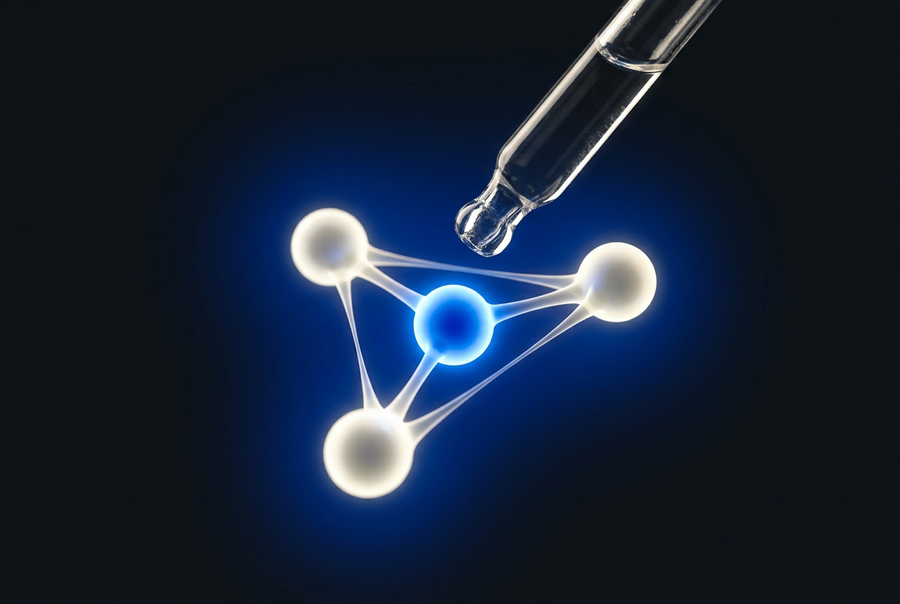
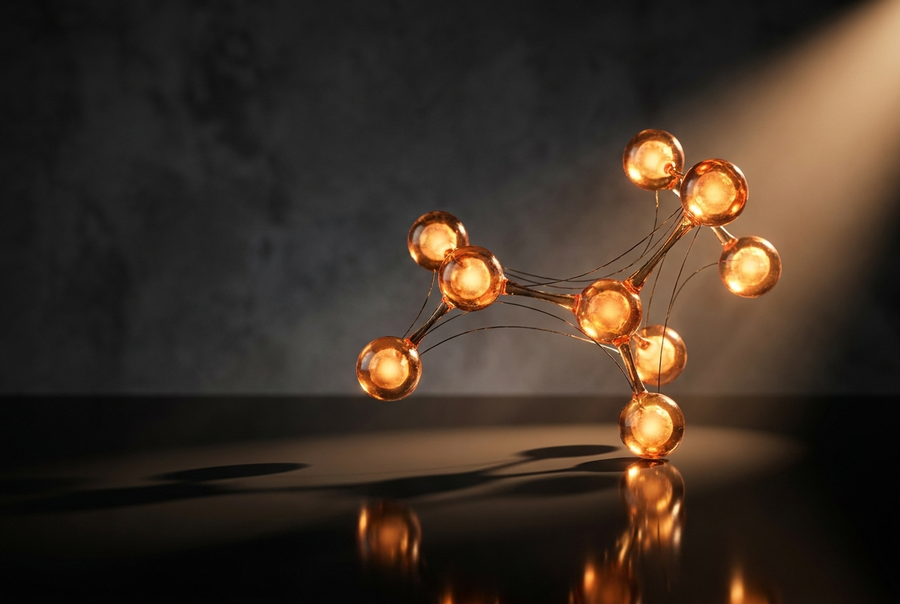
The term "copper peptide" refers to a class of small molecules in which a short chain of amino acids — usually two to four — forms a stable complex with a single copper ion. The most studied and clinically relevant member of the family is GHK-Cu: a tripeptide composed of glycine, histidine, and lysine, bonded to copper.
GHK-Cu occurs naturally in human plasma at a concentration of roughly 200 ng/mL in young adults, and declines significantly with age — falling by more than half between age 20 and age 60. That decline correlates with reduced tissue regeneration capacity, slower wound healing, and progressive thinning of skin and hair structures throughout the body. The functional theory of topical copper peptide treatment is straightforward: restore the signal that is no longer being produced endogenously, and a portion of the youthful regenerative response can be reactivated locally.
A Brief History Of The Discovery
GHK was first isolated from human plasma by biochemist Loren Pickart in 1973, in research published in the journal Nature.1 Pickart's initial finding was unrelated to hair — he was studying the difference between how liver cells from young and old donors responded to plasma fractions, and he isolated a small peptide that appeared to confer regenerative properties when added to cells from older donors.
It took another decade for the copper-bound form, GHK-Cu, to be identified as the biologically active complex, and another two decades for the molecule's mechanism to be mapped at the gene-expression level. The result of fifty years of follow-up research is now one of the most thoroughly characterized small peptides in the medical literature, with documented effects across wound healing, dermal repair, anti-inflammatory signaling, angiogenesis, and follicular activity.
The relevance to hair came later, but it has held up. Controlled in vitro work demonstrated that tripeptide-copper complexes applied to human hair follicle organ cultures increased the size of the dermal papilla and prolonged the active growth phase.2 Earlier dermatology research had already documented that copper-related peptide signaling influenced hair follicle activity at a fundamental level.3
How They Build Thicker Hair Shafts
"Thicker hair" has a precise biological meaning. The diameter of a hair shaft is determined by the size and activity of the dermal papilla at the base of the follicle that produces it. A large, well-vascularized, metabolically active dermal papilla generates a thick terminal hair shaft. A small, miniaturized dermal papilla generates a fine vellus hair — the wispy, lightly pigmented kind that increasingly populates a scalp affected by pattern hair loss.
The mechanism by which copper peptides produce thicker shafts is the reverse of that miniaturization process. GHK-Cu upregulates the expression of genes associated with anagen — the active growth phase of the hair cycle — and stimulates proliferation in dermal papilla cells.4 Functionally, miniaturized follicles can re-enter a more active state, producing hair shafts that are visibly thicker and more pigmented than what was being produced six to twelve months earlier.
Equally important, the copper bond drives crosslinking of collagen and elastin in the dermal matrix surrounding the follicle. Lysyl oxidase, the enzyme responsible for that crosslinking, is copper-dependent. A follicle embedded in well-structured dermal collagen mechanically supports a thicker hair shaft than one embedded in degraded tissue. This is why GHK-Cu's effects on the scalp environment are inseparable from its effects on the hair itself.
How They Create A Healthier Scalp
"Healthier hair" is generally a function of the scalp it grows out of, not the strand itself. Three properties of GHK-Cu contribute directly to the scalp environment in a way that pays forward to every hair growing from it.
The first is anti-inflammatory signaling. GHK-Cu downregulates several of the pro-inflammatory cytokines that contribute to chronic perifollicular inflammation — the low-grade immune response around follicles that has been repeatedly documented in histological samples of pattern hair loss and that accelerates miniaturization over time.
The second is antioxidant activity. The molecule neutralizes reactive oxygen species and reduces the lipid peroxidation that drives oxidative damage to follicular cells.5 Oxidative stress is one of the more consistent biological signatures of an aging scalp, and the data linking it to hair-shaft quality is robust.6
The third is improvements in dermal microcirculation. GHK-Cu has been shown to stimulate angiogenesis — the formation of new capillaries — which over months of consistent use can rebuild some of the vascular density that pattern hair loss progressively erodes around affected follicles.
The cumulative effect is a scalp that is less inflamed, less oxidatively stressed, and better perfused. Hair grown out of that environment is healthier almost by default.
The Difference Between "Copper Peptide" And GHK-Cu
One of the more common sources of consumer confusion is that "copper peptide" is used loosely on labels to describe a category of ingredients with very different biological profiles. There are at least a dozen tripeptide and tetrapeptide compounds that can be marketed under the copper peptide umbrella, and the research base behind most of them is thin to nonexistent.
GHK-Cu is the molecule with five decades of published research and the only copper peptide for which a clear mechanism of action has been documented across multiple independent laboratories. When you read a label that says "copper peptides" without specifying GHK-Cu — or AHK-Cu, the related but less-studied tetrapeptide — you have no way to know which compound is actually in the bottle, at what purity, or at what concentration.
Beyond the molecule itself, two factors determine whether a copper peptide product will actually do anything. The first is concentration — many products contain GHK-Cu at fractional percentages that are sufficient to put it on the ingredient list but not sufficient to produce a meaningful effect. The second is stability — GHK-Cu degrades when exposed to heat, oxygen, pH drift, or extended UV exposure, which means a peptide product that is not formulated and packaged for stability may have lost most of its activity before it reaches the user's scalp.
How Long Until You See Results
The hair cycle is slow. A new hair shaft takes between two and six months to grow from the dermal papilla out to a visible length on the scalp surface, which means any topical that improves follicular activity will produce visible results on a months-long, not weeks-long, timeline.
In practice, users on a daily GHK-Cu protocol tend to notice the first changes around the eight-to-twelve-week mark — typically reduced shedding, a faint improvement in scalp condition, and a sense that the hair looks slightly fuller without being able to quantify exactly why. Visible density changes generally start to register at the four-to-six-month mark, and a fully assessable result requires at least nine to twelve months of consistent application. The protocol works on follicle biology, not on cosmetic appearance — which is why honest before-and-after photography is the only reliable way to evaluate progress.
The Bottom Line
Copper peptides — and specifically GHK-Cu — are one of the few categories in the hair-loss space where the marketing narrative is anchored to a real biological mechanism. The molecule has been studied for fifty years, the effects on dermal papilla activity and scalp environment are documented across multiple independent research lines, and the result, when the product is formulated correctly and used consistently, is thicker hair shafts grown out of a healthier scalp. The catch is that not every product labeled "copper peptide" delivers on that science. The molecule has to be GHK-Cu specifically, at a clinically meaningful concentration, in a formulation that preserves stability long enough for the peptide to actually reach the follicle. Done right, the science genuinely backs the claim.