
5 Reasons Women's Hair Thins After 50 (Chronic Inflammation Is the One Nobody Talks About)
Everyone blames estrogen. But when researchers put women's thinning under the microscope, the shrinking follicles were the inflamed ones. Here's what researchers have found, and why your scalp deserves its own routine.

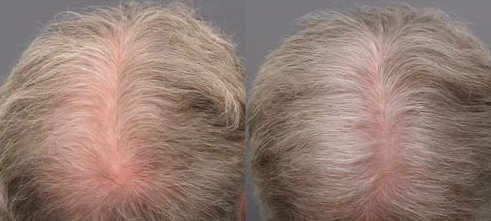
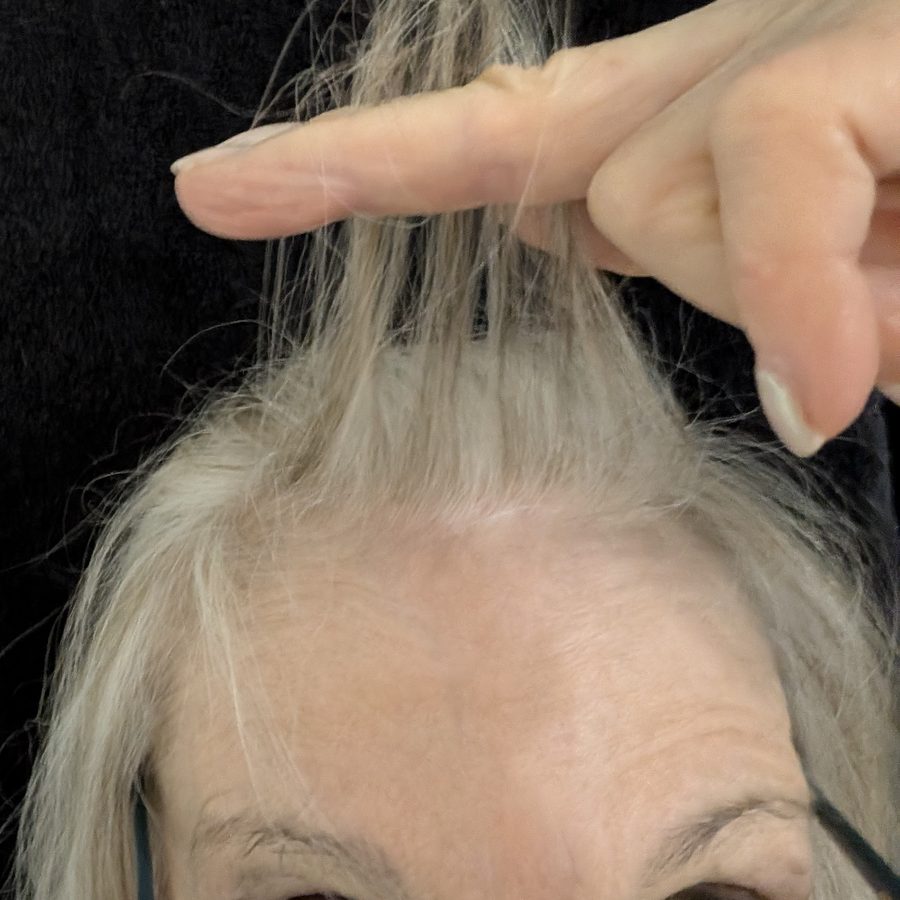
It usually shows up in a photo. The part looks wider than it did. The ponytail is thinner in your hand. There's more in the drain than there used to be.
If you've tried the supplements, asked your doctor, and been told it's "just your age" or "just hormones", here's what's actually changing.
TL;DR: Most hair products for women focus on hormones or blood flow. Few are made for the scalp itself, even though researchers keep finding scalp inflammation in women with thinning hair.
Reason 1: Women's thinning has an inflammation problem.
When researchers looked closely at women with pattern thinning, the shrinking follicles were the inflamed ones. The more inflammation around a follicle, the more of its cells were dying.

In one set of scalp biopsies from 52 women with pattern thinning, 33 showed an immune signature right at the follicle.
Hair biologists call this low-grade, chronic version microinflammation. You can't see it or feel it. And almost nothing in the usual routine is aimed at it:
| Option | Built for | Built for the scalp environment? |
|---|---|---|
| Hormone therapy | Hormones, body-wide | No |
| The pills | Hormones | No |
| The foam | Blood flow | No |
| Hair supplements, biotin, gummies | Your diet | No |
| Thickening shampoo | The strand | No |
| Copper peptide serum | The scalp environment | Yes. That's its whole job. |
None of this is a knock on what you use. If something is prescribed, keep talking to your doctor. It's just a missing piece.
Reason 2: It's not rare. It's about half.
When dermatologists examined healthy women aged 50 to 65, about one in two had pattern thinning, most of it mild enough that they'd never had it named.
Hair density keeps falling with age too: from about 293 hairs per square centimetre at 35 to about 211 at 70.
You're not imagining it, and you're far from alone.
Reason 3: Hormones start it. They don't explain all of it.
The hair follicle reads estrogen. When estrogen falls, each hair grows more slowly, fewer hairs stay in their growing phase, and strands come in finer, most of all at the front of the scalp. Texture changes too.
But here's the part most people miss: in studies, women's hormone levels don't line up with how much they thin. The balance tips, yet blood tests can look normal. For men, science blames one hormone. For women, the field's leading review still lists the cause as undetermined (source 12).
Reason 4: The ground the follicle grows in gets thinner.
After menopause, skin loses collagen and thickness at about 1 to 2 percent a year, and the loss tracks the years since menopause, not birthdays. The scalp is skin.
Less estrogen also means skin repairs more slowly, and stays in its inflammation phase longer. A follicle is only as healthy as the tissue around it.
Reason 5: Your body already makes copper peptides. It makes less every year.
The copper peptide in Restore occurs naturally in human blood, and levels fall with age. It has been studied for decades in skin care, including face-cream studies in women around 50. Restore puts it in a daily scalp serum for thicker-, fuller-looking hair.

Restore puts it on the scalp, once a day:
- 0.5 percent copper peptide, printed on the label. Most serums don't list their concentration.
- Hormone-free. Nothing to swallow. No prescription.
- Third-party tested, every batch (View the COA). Made in the USA.
- Safe on coloured hair.
150 days to see it for yourself, with a money-back guarantee (monthly progress photos required).
Try Restore for 150 DaysQuestions women ask first
I've tried a peptide serum before. How is this different?
Did it list the concentration? Most don't. Restore does: 0.5 percent, third-party tested.
Isn't this a men's product?
Restore started with men, and hundreds of women use it every day. Jude is 62. Regina is 45. Restore is hormone-free, so it suits anyone's scalp.
Will it leave my hair greasy or sticky at the roots?
No. One dropper on the scalp at night, massage it in, and let it absorb. A quick rinse in the morning is optional: there's no residue.
My hair is long and coloured. Does that matter?
It's safe on coloured hair. Part the hair in a few lines and drop it straight onto the scalp along each part, then massage in.
Do I have to stop what I'm already using?
No. If something you use is prescribed, including hormone therapy, talk to your doctor before changing it.
How fast most women see a difference
Honestly? Not fast. Hair grows in cycles: a hair that sheds rests for about three months before a new one starts, then grows about half an inch a month. Anything that changes at the follicle takes months to reach the mirror.
- Month 1ShedThe hair rests.
- Month 2RestingAbout three months in all.
- Month 3A new hair startsThe next cycle begins.
- Month 4GrowingAbout half an inch a month.
- Month 5Judge it yourselfFive months of daily use.
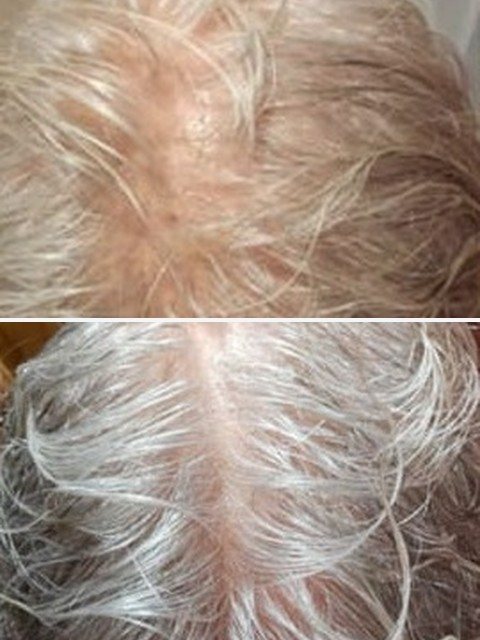 BeforeAfter · 3 months
“This stuff is great. Here are my honest 3 months results.”
Alicia A. · Verified Buyer · Individual results vary
That's why a 30- or even 90-day guarantee doesn't work for hair. Restore comes with a 150-day money-back guarantee: five months to use it every day and judge it for yourself.